
Boardman Township Previous Residents by Era
For a Boardman Township address, the useful record changes with the date. The Mahoning County Auditor supplies the current parcel, legal description, sales, tax, and valuation starting facts. The Recorder then supplies the recorded land trail. Household sources answer a different question and should not be treated as deed proof. The Vindicator may offer an address, notice, or obituary, but its available scans have known gaps. The 1880 Boardman Township census index and released federal census schedules offer dated household evidence. Zoning material can place physical or project activity at an address without proving every person connected with the property.
| Source | Verified years | Channel | Contribution to an address trail |
|---|---|---|---|
| Recorder Laredo | 1980-present | Registered remote search and Recorder office | Recent recorded documents and index trail. |
| Recorder public computers | Historical period not published | 13 self-service computers | Older land-index fallback after the remote period. |
| Auditor parcel page | Current page; earliest online history not published | Auditor search and counter | Parcel, legal description, sale, and property facts. |
| PLYMC Vindicator resource | 1869-2009, with scan gaps | Library genealogy resources | Notices, addresses, obituaries, and local chronology. |
| MVHS 1880 index and federal census | 1880; federal census released through 1950 | MVHS, NARA, and Census channels | A household lead for a fixed census date. |
| PLYMC Ohio Sanborn resource | 1882-1962 statewide resource | PLYMC genealogy resources | Building or block context only; no Boardman sheet or year run was verified. |
| Planning and Zoning files | Retention period not published | Portal, counter, or request | Property-change or board-action chronology where releasable. |
Begin with the parcel when the target is a house, lot, or former address. Begin with a dated directory or census when the target is a family question. Neither path replaces the other. The address history becomes more reliable when the legal description, date, and source are written down with each finding.
Boardman Township Previous-Resident Parcel Start
The Mahoning County Auditor is the first stop for Boardman Township past-resident work because it ties a street address to a parcel. Use the quick search or the address controls, then save the parcel number, situs address, legal description, sale details, and the current deeded-owner field. The parcel card may also provide a map link, assessment history, tax information, and a printable property record card. These are property facts. They do not list all people who lived at the site.
Two address fields need special care. Deeded Owner Address is taken from the last recorded document. Tax Payer Address is the address for tax correspondence. Either can be away from the Boardman Township situs, and neither by itself proves present residence. The legal description is the durable bridge to older material because it identifies a lot, block, subdivision, or tract even when street numbers, delivery labels, or a parcel configuration shift.
- Grantor
- The party transferring an interest in a recorded instrument, commonly the seller in a deed.
- Grantee
- The party receiving an interest in that instrument, commonly the buyer.
- Chain of title
- The sequence of recorded transfers for the same property, checked document by document rather than assumed from names alone.
- Legal description
- The lot, block, subdivision, tract, or other land description that connects the Auditor card to the correct recorded document.
Note: A parcel card is an organized property inventory, not a certified deed or a complete account of who lived there.
Boardman Township Previous-Resident Deed Trail
Trace previous residents through ownership only after the current parcel has been identified. The Recorder identifies its free registered Laredo search and print service as covering 1980 to present. Start with the Auditor sale or acquisition information, then find the present deed using the current owner as grantee, a date range, document number, or the legal description. Read the instrument, not only the index result. The parties and land description must fit the parcel being traced.
- Open the Auditor parcel record and capture the parcel number, legal description, sale or acquisition date, and current recorded-owner information.
- Use the Mahoning County Recorder index to locate the acquisition instrument by grantee, date, document number, or legal description.
- Read the actual instrument. Record its grantor, grantee, recording date, document number, and the land description used for the transfer.
- Search that prior owner as a grantee in an earlier range. Confirm the same lot, block, subdivision, tract, or parcel relationship before treating it as the earlier link.
- Repeat the document-and-description check. Use plats and the actual recording when a split, new plat, recurring name, or address change interrupts the chain.
This is a title method, not a name-only shortcut. One person can hold several parcels, and a modern address can obscure an older lot description. A past owner can be a useful historical lead, but a deed transfer does not automatically identify all past residents of the Boardman Township property.
Boardman Township Previous-Resident Recorder Limits
The remote period has an important Boardman Township research caveat. The Recorder describes Laredo as 1980-present, while a separate Recorder page says electronic indexes begin in January 1985 and older material must be viewed in the office. Those statements should be preserved, not blended into an invented cutoff. Check the desired document year in the current live system. If it is not available remotely, continue at the Recorder rather than declaring the past-residents trail over.
The Recorder provides 13 public computers for self-service searching. Staff do not perform the search by phone or in person. Bring the current legal description and any known document reference, then ask which historic grantor-grantee index, book, or microfilm is appropriate. The office can handle a copy request when recording information is already known, but that is not a substitute for an open-ended title search. The Recorder counter is at 120 Market Street, first floor, Youngstown, with regular hours listed as 8:00 a.m. to 4:30 p.m.; basement self-service hours are listed as 8:00 a.m. to 4:00 p.m.
Boardman Township Past Residents in 1914
Earlier Boardman Township searches need older vocabulary. The digitized 1914 Official Mahoning County Directory was compiled by O. A. Potts and published by the Mahoning County Directory Company. It supplements the Youngstown directory with county residents and corporations beyond the city-centered coverage. Its key decodes spouse brackets, compass or landmark locations, township, rural free delivery, children, telephone, acreage, and town-property notation.
A Boardman Center entry uses “Boardman tp. rfd Poland 2,” while another Boardman Township entry uses a half-mile reference north of Cooks Corners and Youngstown RFD 4. Those local examples show why a current number and ZIP are poor stand-ins for a 1914 search. Try a surname with township, rural route, crossroads, acreage, or a nearby landmark. Later reverse-directory collections may help with address-to-name work, but the verified finding aids require checking each volume's Boardman geography and year before relying on it.
The PLYMC directory record documents the digitized local source used for this rural-route approach.
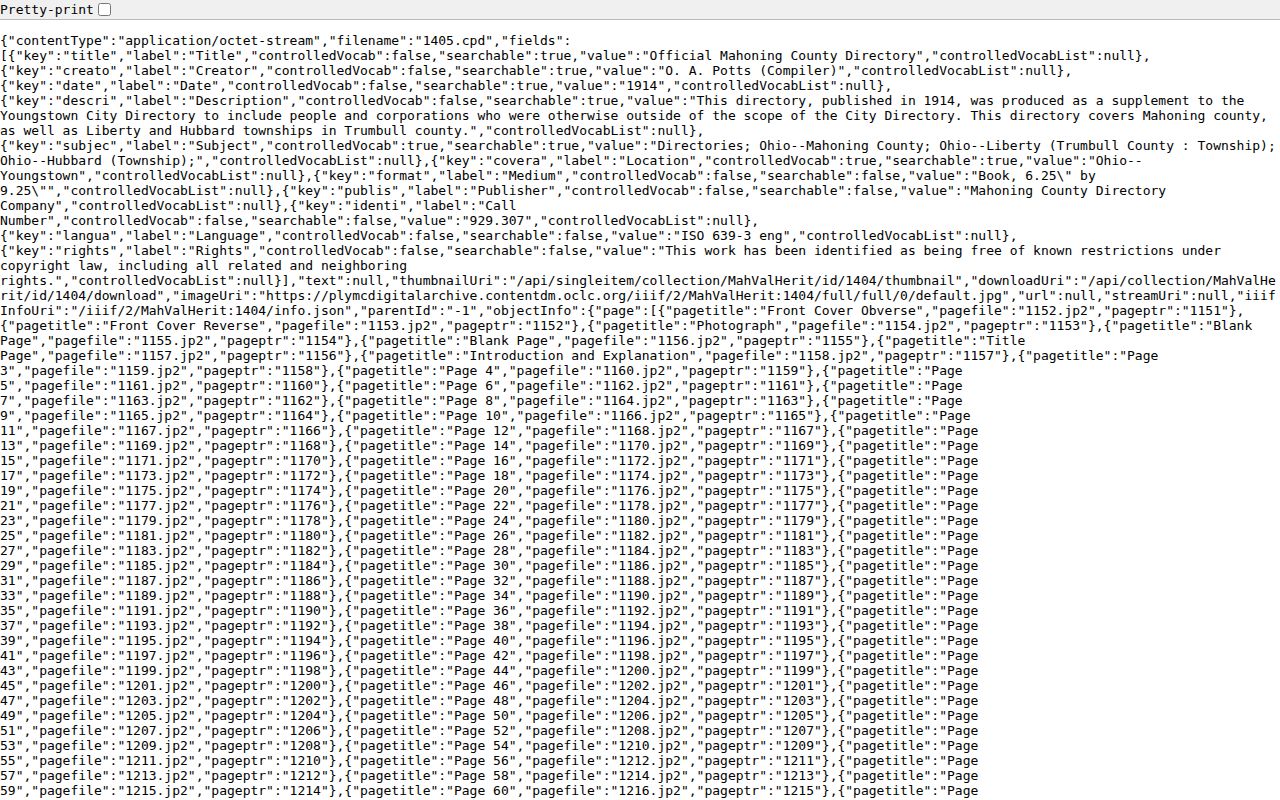
Its directory context supports searching by the terms that appear in an older entry, then testing a possible household against a dated property or census record.
Boardman Township Previous-Resident Census Pairing
Directories and census schedules should be paired as separate dated records. PLYMC describes the Youngstown Vindicator resource as a 1869-2009 run with poorly digitized or missing issues. A non-hit therefore means only that the person was not found in the available scan. MVHS lists a Boardman Township 1880 census index, and federal population census schedules are released through 1950. Each source can provide a household lead, not a timeless answer about an address.
- Choose a narrow year and retain the spelling, address language, page, and edition from a confirmed directory or newspaper entry.
- Pair that date with the nearest released census year and compare household composition, age, birthplace, and other historical identity details.
- Check the parcel and deed chronology separately for ownership during the same period. A directory can be compiled before publication, while a census has a fixed enumeration date.
- Keep conflicts visible. A newspaper can report a former address, and a same-name person may belong to another Boardman Township household.
The National Archives genealogy gateway is an authoritative starting route for released census and other federal historical holdings.
Federal material works best as a date-bound household cross-check beside the local parcel, deed, directory, or newspaper evidence.
Boardman Township Previous-Resident Zoning Chronology
A permit or zoning file can date a change at a Boardman Township address without producing a resident list. The Planning and Zoning Department offers public actions to search an existing complaint or permit, apply for a permit, and submit a complaint. Its public-record request form accepts a property address, a record description, and paper-copy or PDF delivery choices. Ask whether the file is a zoning certificate, plan, inspection, board filing, complaint, or another retained series. Release and redaction can vary by record.
The form warns that some materials may take up to 30 days because they are stored offsite. A targeted request can name the address, approximate time span, desired record category, and preferred medium. The form asks for a reason, but Ohio R.C. 149.43 does not generally require a reason to request a public record. The department is at the Boardman Township Government Center, 8299 Market Street, and the department phone is 330-726-4181.
Note: A permit applicant, project contact, or complaint reference needs separate contemporaneous evidence before it is treated as a past-resident connection.
Boardman Township Previous-Resident Estate Endpoints
When the land trail ends with a death or estate, switch from property history to family-history records. The Mahoning County Probate Court portal and Probate counter are the estate route for a case docket, fiduciary, and older-file access. An heir name or service address in an estate filing is a time-specific filing fact, not proof of where a person lives now. Use the actual case record before drawing a family connection.
PLYMC's Boardman Cemetery compilation adds maps, photographs, grave marks, lot assignments, obituaries, local history, and an index. Its history describes lost or unrecorded early burials and roughly 100 unidentified graves. That is a strong warning against treating an absent name as proof of no burial. MVHS also lists the Trigg Brothers Monument Company ledger for 1878-1927, which can preserve an order, inscription, sketch, ordering person, and placement location. It is a deceased-family research lead, not a present-address source.
Boardman Township Previous-Resident Limits
Past-resident research is strongest when it stays within a lawful personal purpose such as family history, estate work, or understanding a property's record trail. Keep a written source trail and do not turn mailing fields, census names, cemetery material, or an old notice into a claim about a living person. Ohio voter records also have protected fields and confidential-participant rules, while utility and DMV information are not general resident-search sources.